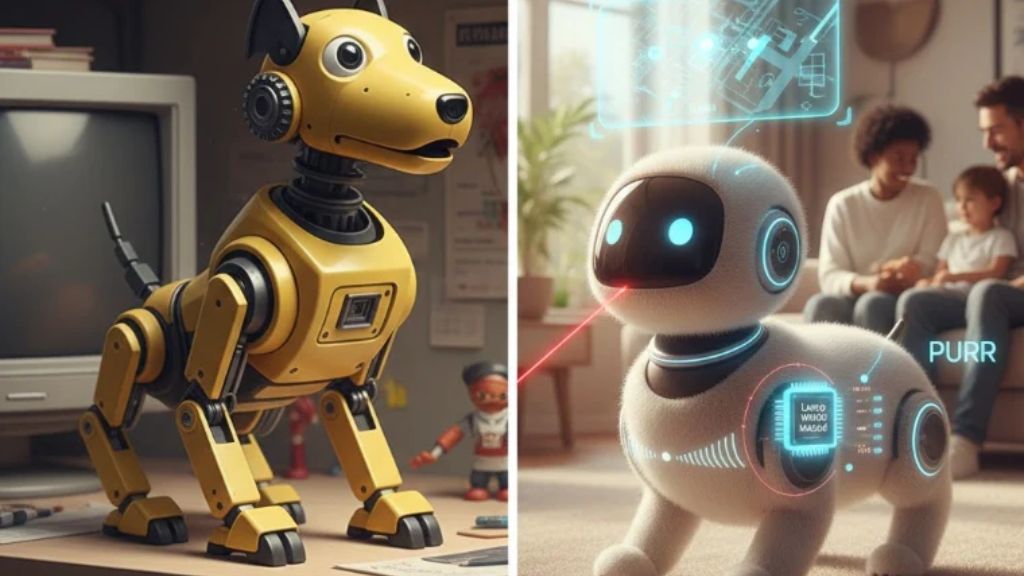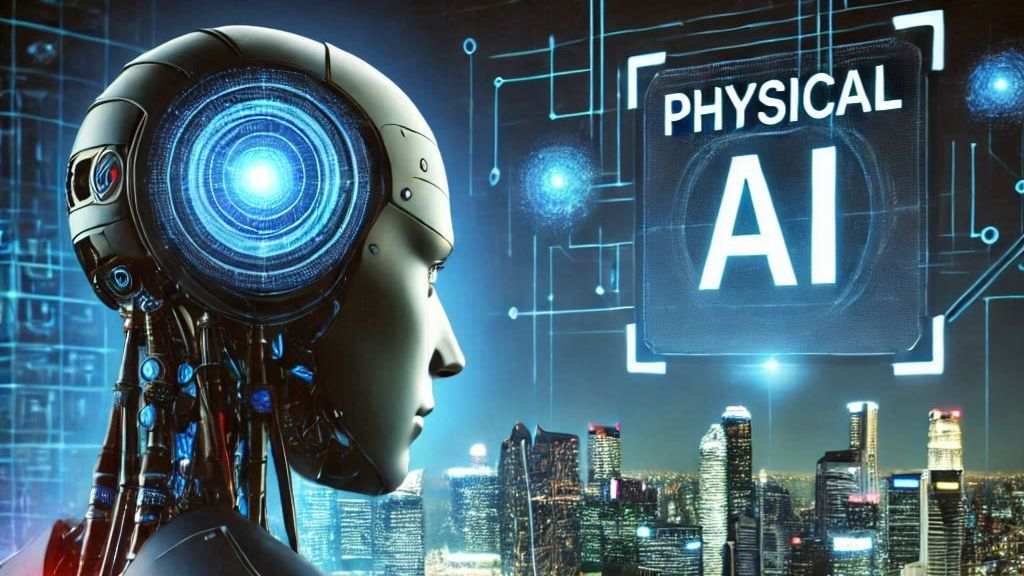
Ever watch a robot in a movie and wish you could have one in your home? Well, that time is finally here! The tech world’s biggest news in 2026 is something called Physical AI.
For a long time, Artificial Intelligence (AI) was a brain without a body. It could even speak to you on the phone or assist you in writing a story on a computer, although it couldn’t pick up a glass of water or clean your room for you. Physical AI changes everything because it gives that “brain” a “body” to interact with the real world.
What Exactly is Physical AI?
The easiest way to understand Physical AI is to imagine the difference between a video game character and a real person. A video game character is nothing but an image on a screen. But you have a body, one that can feel, move, and react to the things around you.
Physical AI is the deployment of innovative computer programs in machines such as robots, drones, and self-driving cars. Rather than just “thinking” about data, such machines can now also “see” the world with sensors, “decide” what to do using their AI brains, and then “act” with their mechanical arms or wheels.
Key Idea: A traditional AI lives in your computer. Physical AI lives in the real world. It’s the bridge between digital code and the physical objects we touch in our daily lives.
Read Also: The Ultimate Guide to AI Smart Glasses
Why is Everyone Talking About It in 2026?
This year, Physical AI becomes a “trending topic” as the technology finally transitions from secret science labs to our cities and homes. At big events like the Consumer Electronics Show (CES 2026), companies showed off robots that can do amazing things.
Here’s what you need to know about why it’s so popular at the moment:
- Humanoid Robots: We finally have robots that resemble people to a certain extent! They have two legs to walk up stairs, and two arms to carry boxes. Because they have Physical AI, they don’t simply follow a script; they can learn how to navigate a messy room just like you do.
- Smart Factories: In big factories, robots are no longer stuck behind safety fences. Thanks to Physical AI, they can work closer to humans. If a human moves unexpectedly, the robot “sees” them and stops or moves out of the way to stay safe.
- Self-Driving Everything: It’s not just cars anymore. We have autonomous delivery drones that bring snacks to your door and smart suitcases that follow you through the airport so you don’t have to carry them!
How Does Physical AI Actually Work?
If you wanted to build a Physical AI friend, you would need three main parts:
1. The Eyes and Ears (Sensors)
A robot has to understand the world around it. It relies on sensors, such as cameras, to see colors and shapes. It also uses LiDAR, which is kind of like a laser scanner that creates a 3D map of the room so the robot doesn’t bump into the sofa.
2. The Brain (AI Algorithms)
The “brain” is what matters. In 2026, we rely on multimodal AI. This means the robot can understand many things at once—like words, pictures, and the feeling of touch. If you tell a robot, “Please pick up the red ball,” its brain can understand your voice command, detect the red color with its eyes, and figure out how to move its arm.
3. The Muscles (Actuators)
In a robot, the muscles are called actuators. These are the motors that control the motions of arms and wheels. Physical AI instructs these motors exactly how much power to use. For example, it knows to use a gentle touch to pick up an egg but a strong grip to hold a heavy hammer.
Real-Life Examples You Might See Soon
You might be surprised to find Physical AI in many places you visit!
- In Schools: Some schools are testing “AI Tutors” which are small robots that can help students with science experiments by handling the, tools into their hands and explaining how they work.
- In Hospitals: There are now “Medical Assistants” that carry heavy medicine Trays and even help doctors during surgery with perfect precision.
- In Your Neighborhood: You might see small, six-wheeled robots rolling down the sidewalk. These use Physical AI to deliver mail or a groceries without getting lost or hitting a mailbox.
Learning Through “Digital Twins”
How does a robot learn to walk without falling over a million times in your living room? Engineers use something called a Digital Twin.
A Digital Twin is an exact virtual copy of the robot and the room it will be in. The robot “practices” in this virtual world millions of times. It learns from its mistakes in the computer, where nothing can break. Once it is an expert, the engineers “download” that knowledge into the real robot. This makes the Physical AI very smart before it even takes its first real step!
Is Physical AI Safe?
Safety is a critical aspect of Physical AI. Scientists are working hard to make sure these machines always follow the rules. They use “Guardrails,” special pieces of code that stop the robot from doing anything dangerous. For example, a delivery drone is programmed never to fly too close to people or power lines.
Most people think that Physical AI will make our lives safer. Robots can perform “Dull, Dirty and Dangerous” tasks — such as cleaning up toxic waste or repairing underwater pipes — so humans don’t have to put themselves at risk.
The Future: A World of Helpful Machines
Physical AI will grow as we head into 2026. We will experience more “Agentic AI,” systems that can plan their own days. Instead of you telling a robot every single step, you might just say, “Help me prepare for my birthday party,” and the Physical AI will figure out how to blow up balloons, set the table, and tidy the floor all by itself.
It is an exciting time to be a student because you might be the one designing the next generation of Physical AI! Whether it’s a robot that plants trees to protect the environment, or smart suits that enable people to walk again, in this realm, the sky is no limit at all.”
Read Also: What Are Bayesian Networks?
Summary Table: Old Robots vs. Physical AI
| Feature | Old Robots | Physical AI (2026) |
| Thinking | Follows a strict list of rules. | Learns from experience and adapts. |
| Movement | Can only do one task (like welding). | Can do many tasks in different places. |
| Senses | Limited sensors, easily confused. | Advanced cameras, LiDAR, and touch. |
| Environment | Must be in a controlled factory. | Can work in homes, parks, and cities. |
Physical AI is more than just a trending topic; it’s a new way of life, in which our machines are now as smart as the software inside them. The world of science fiction is becoming our real-world reality!