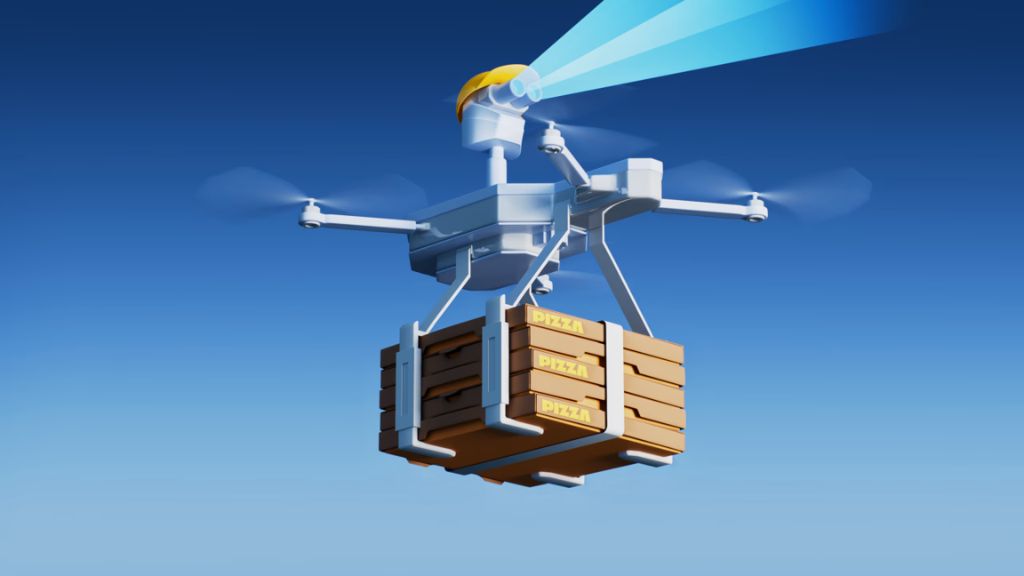
Rising labour costs and declining delivery margins are pushing big platform companies like Grab to accelerate their investment in automation. As such, Grab has strengthened its in-house robotics capabilities with its acquisition of Infermove.
Operating at a massive scale, Grab is uniquely positioned to benefit from even minor efficiency improvements. The company’s platform processes millions of deliveries across Southeast Asia, and many depend on riders navigating crowded city streets on scooters and bicycles. The great variety in this type of urban environment makes it challenging to achieve complete automation, as human judgment is still necessary in several cases. However, by acquiring a firm specializing in robotics built for unstructured, real-world situations, Grab is signaling its conviction that physical world AI has progressed beyond experimental testing and is now ready for practical deployment beyond limited pilot use.
Delivery automation close to core operations
Instead of depending on ready-made automation solutions, Grab is choosing to bring the entire development cycle under its own control. Infermove’s designs systems that can directly learn from real-world mobility data, such as movement patterns generated by non-motorized delivery methods. On a practical level, this means that robots can be trained to mimic the way people tend to move around sidewalks, intersections, and crowded delivery zones, rather than relying solely on idealized virtual models.
Read Also: Artificial Intelligence in Robotics
For a logistics platform operating at Grab’s scale, this difference is critical. Although simulated environments are helpful for initial experimentation, they often fail to capture the unpredictable edge cases that define real urban landscapes. While in-sourcing such a learning process, Grab gains the ability to shape robotic behavior around its own operational realities, rather than reshaping its delivery network to accommodate an external vendor’s system.
From a business perspective, the central advantage is governance. With ownership of the fundamental technology, Grab has more control over rollout timelines, deployment boundaries, and cost-performance decisions. It also reduces dependence in the longer term on third-party partners whose strategic priorities may not align with Grab’s geographic markets or economic conditions.
Crucially, the idea is not that automation should replace human couriers. While robots do perform specific functions in the workflow, they still rely on humans for service delivery. Grab’s focus appears to be on targeted applications, such as defined first-mile or last-mile segments—where routes are short, tasks are repetitive, and variability is limited. In such situations, robots could play a role in coping with peaks in demand, reducing waiting times at peak times of the day, and providing relief during times of labor scarcity.
Managing cost pressure without breaking service
During a company-wide meeting in December, Grab Chief Technology Officer Suthen Thomas called Infermove’s progress “impressive,” stating that the quality of its technology was good and that it had completed its initial commercial deployments. He also added that Infermove would maintain its independent status, with the founder reporting directly to him. This organisational structure shows that Grab is prioritising operating momentum and stability over near-term structural integration.
This strategy aligns with a broader trend across major digital platforms. Instead of layering AI capabilities onto existing systems as an add-on, companies are increasingly weaving AI directly into their core operational frameworks. In the delivery and logistics sector, this evolution often involves moving past purely software-driven optimisation toward physical automation. This area carries a higher risk and investment but offers more fundamental efficiency gains.
This move reflects a larger trend among major digital platforms. Instead of layering AI capabilities onto existing systems as an add-on, companies are increasingly weaving AI directly into their core operational frameworks. In the area of delivery and logistics, this evolution often involves moving past purely software-driven optimization toward physical automation. This area carries a higher risk and investment but offers more fundamental efficiency gains.
The timing of this action is crucial. While demand for on-demand delivery services continues to grow, profit margins remain low. Customers want faster deliveries at lower rates, but operators must contend with rising labor costs, fuel expenses, and increasingly stringent regulatory environments. Under these conditions, automation shifts from being an experimental innovation to a necessary tool for maintaining service quality without further squeezing margins.
Bringing robotics development closer to day-to-day operations may also enhance the utilization of data. Teaching physical AI systems often requires vast amounts of real-world data, which delivery platforms already produce continuously. Having this feedback loop in-house can accelerate development cycles and reduce dependency on exposing sensitive operational data to external partners.
That said, practical constraints remain. Robots designed to navigate sidewalks and short distances won’t replace human couriers for entire delivery networks in the near future. Issues, including weather, local regulations, and community concerns, will limit where and how automation can be implemented. Operating across multiple countries adds another layer of complexity, as infrastructure quality and legal background vary significantly from one country to another.
Read Also: What Are Bayesian Networks?
Final Thought
Although industry projections point to rapid expansion in last-mile delivery robotics, these forecasts offer limited insight for operators on the ground. More importantly, is the question of whether automation can truly lower per-delivery costs, without introducing other operational risks. This question is answered not by market potential, but by real-world performance at scale.
From an enterprise perspective, Grab’s acquisition of Infermove is less about entering the robotics market as a standalone business. Instead, it is part of the company’s ongoing effort to integrate its artificial intelligence capabilities more closely with its data and physical operations. For platform companies rooted in logistics and mobility, this tighter integration may prove essential for sustaining growth while navigating ongoing cost pressures.